
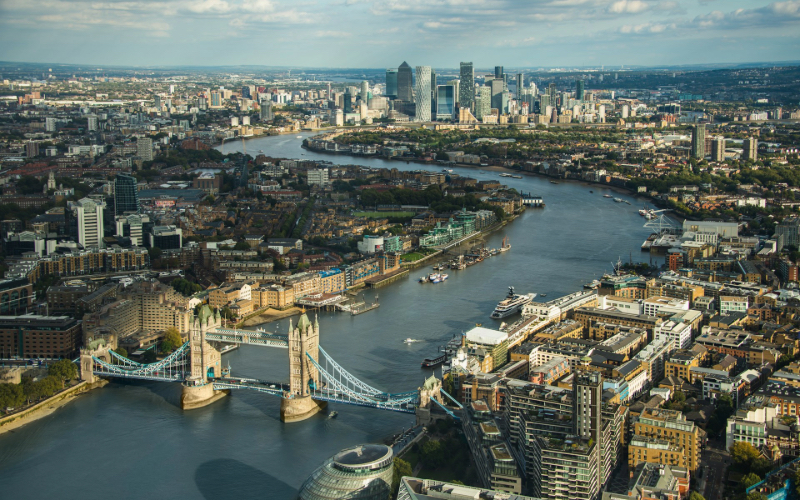
London is one of those cities that somehow manages to be exactly what you expect and nothing like you imagined, all at the same time. You’ve seen Big Ben in movies a thousand times, but standing there in person as the bells chime hits differently. You know the Underground map by heart from cultural osmosis, but navigating it while jetlagged with a suitcase is its own adventure.
This is a city built on layers. Roman walls hide beneath medieval churches. Victorian grandeur butts up against brutalist concrete. A two-thousand-year-old history coexists with some of the most cutting-edge art, food, and culture anywhere on the planet. You could spend a lifetime here and still stumble upon hidden corners you never knew existed.
So where do you even begin?
Historic Landmarks and Royal Sites
Start with the icons. Get them out of your system early, because they genuinely deliver.
Buckingham Palace sits at the end of The Mall like a wedding cake made of stone, and watching the Changing of the Guard is one of those experiences that feels almost absurdly British. Red tunics, bearskin hats, military precision, horses clopping on cobblestones. It happens at 11am on certain days throughout the year, and the crowds gather early for a reason. Check the schedule before you go, because nothing dampens enthusiasm quite like showing up on an off day.
The Tower of London deserves a full morning, minimum. This isn’t just some old castle you wander through in twenty minutes. It’s been a royal residence, a prison, an execution site, a zoo, and the home of the Crown Jewels for nearly a thousand years. The Beefeaters who lead tours are former military personnel with a gift for storytelling, mixing gruesome history with dry wit in a way that makes the place come alive. When you finally reach the jewel house and see those diamonds glittering under spotlights, you understand why people have killed for them.
Westminster Abbey is where kings and queens have been crowned since 1066. It’s also where they’re buried, along with poets, scientists, and national heroes. Walking those floors means walking over centuries of history, quite literally in some cases. The architecture soars upward in a way that makes you feel appropriately small, and even the gift shop can’t entirely diminish the sense of sacred weight the building carries.
Right next door, the Houses of Parliament and Big Ben create possibly the most recognizable skyline in the world. The tower is officially called Elizabeth Tower now, but nobody calls it that. You can tour Parliament when it’s in session and watch democracy happen in real time, which is either inspiring or alarming depending on your political outlook.
Cross the river and St. Paul’s Cathedral waits with a different kind of majesty. Christopher Wren’s masterpiece survived the Blitz when everything around it burned, and climbing to the dome rewards you with some of the best panoramic views in London. The Whispering Gallery lets you test whether sound really does travel around curved walls. It does. Tourists have been delighting in this fact for centuries.
World-Class Museums and Galleries
Here’s something Americans in particular find shocking: most major London museums are free.
Free. No catch. Just walk in.
The British Museum alone could occupy you for days. The Rosetta Stone sits in its glass case like the celebrity it is, surrounded by tourists snapping photos. Egyptian mummies line the galleries, preserved faces staring back across millennia. The Parthenon Marbles remain controversial, but their beauty is undeniable. Mesopotamian treasures, Aztec artifacts, Roman sculptures, Chinese ceramics. The collection spans human civilization in a way that feels almost overwhelming.
The Natural History Museum takes a different approach, housing the natural world in a building that itself qualifies as a work of art. The entrance hall features a massive blue whale skeleton that replaced the beloved Diplodocus a few years back. Dinosaur galleries satisfy every childhood fantasy, while the gem collection sparkles with rocks worth more than you’ll earn in several lifetimes. The building’s Romanesque architecture makes you feel like you’re exploring a cathedral dedicated to science.
Art lovers face difficult choices. Tate Modern occupies a converted power station on the South Bank, its industrial spaces perfectly suited to monumental contemporary works. The turbine hall hosts installations so large they border on absurd. Upstairs, rooms dedicated to Picasso, Warhol, and Rothko deliver exactly what you’d hope for. Entry is free, though special exhibitions charge admission.
The National Gallery overlooks Trafalgar Square and contains masterpieces that make art history textbooks feel inadequate. Van Gogh’s Sunflowers. Monet’s water lilies. Works by Vermeer, Caravaggio, and Botticelli. The rooms flow chronologically through Western art, and you emerge blinking into daylight wondering how humans ever created such beauty.
The Victoria and Albert Museum, known locally as the V&A, covers decorative arts with an enthusiasm that makes you care about things you never knew existed. Fashion through the ages. Medieval tapestries. Islamic tiles. Theater costumes. An entire room dedicated to Raphael’s cartoons. It’s eclectic and sprawling and absolutely wonderful.
Neighborhood Explorations
London isn’t really one city. It’s dozens of villages that grew together over centuries, each maintaining its own character despite the boundaries blurring.
Shoreditch and Brick Lane in the East End buzz with creative energy. Street art covers every available surface, from elaborate murals to tiny stenciled figures hiding in doorways. Vintage shops sell everything from Victorian mourning jewelry to 1980s band t-shirts. Sunday mornings bring markets spilling onto the streets, and the curry houses on Brick Lane compete with absurd enthusiasm, staff practically dragging you through doorways with promises of the best biryani in London. Some of them even deliver.
Notting Hill looks like a film set because it literally was one. Pastel-painted townhouses line quiet streets, each worth millions yet somehow maintaining a village atmosphere. Portobello Road Market runs every Saturday with antiques, fashion, and food stalls stretching for over a mile. The crowds can feel intense, but the energy is infectious. Grab a coffee, find a bench, and people-watch for a while.
Camden Town operates on different rules entirely. This is London’s alternative heart, where punk never died and every subculture finds a home. The markets sprawl across multiple buildings, selling leather goods, vintage clothing, and things you didn’t know you needed until you saw them. Street food vendors offer cuisines from every continent. Live music venues host bands every night of the week. It’s chaotic and loud and perfect.
South Kensington brings elegance and refinement, the kind of neighborhood where embassies occupy Georgian townhouses and everyone seems impeccably dressed. The museum row here means cultural treasures within walking distance of each other. Classic afternoon tea spots abound, and even the pubs feel slightly posher than elsewhere.
Covent Garden entertains with an enthusiasm that borders on theatrical. Street performers work the cobbled piazza, everything from opera singers to escape artists. The covered market building houses upscale shops and restaurants, while the surrounding streets offer boutiques and beauty stores. The Royal Opera House anchors the neighborhood, and catching a ballet or opera there feels like a proper occasion.
Outdoor Spaces and River Activities
Green spaces punctuate London with surprising frequency. The city has more parks than most people realize, remnants of royal hunting grounds and private estates now open to everyone.
Hyde Park sprawls across 350 acres in central London, big enough to lose yourself in despite being surrounded by some of the world’s most expensive real estate. The Serpentine lake offers rowing boats in summer and swimming for the brave year-round. Speakers’ Corner near Marble Arch continues a tradition of public oration dating back to the 1800s, where anyone can stand on a soapbox and say pretty much anything. Sunday mornings bring the most entertaining characters.
Regent’s Park offers formal gardens, open-air theatre in summer, and London Zoo at its northern edge. Climb Primrose Hill at sunset for that skyline view you’ve seen in photos, the one that makes London look like a miniature model of itself spread out below.
The Thames defines London in ways both practical and symbolic. A river cruise from Westminster to Greenwich takes you past the Houses of Parliament, under Tower Bridge, through the old docklands reborn as Canary Wharf, and finally to the elegant maritime buildings of Greenwich itself. Audio commentary points out landmarks, and seeing the city from water level offers a completely different perspective.
Walking the South Bank requires no ticket and delivers constant rewards. Start at the London Eye if you want the full tourist experience, those slow-rotating pods offering views for twenty miles on clear days. Continue east past the concrete brutalism of the Southbank Centre, home to concert halls and galleries and excellent people-watching from the riverside benches. Shakespeare’s Globe recreates the original theater with remarkable authenticity, offering tours and performances that bring Elizabethan drama to life. Tate Modern rises ahead, and beyond that Borough Market awaits.
Food and Drink Experiences
Let’s talk about Borough Market, because it deserves proper attention.
This is one of the oldest food markets in London, operating in some form for nearly a thousand years. The current incarnation packs gourmet stalls into Victorian ironwork buildings, creating a sensory overload of smells, sights, and tastes. Cheese mongers offer samples. Olive oil vendors explain the difference between first cold press and everything else. Fresh pasta is made before your eyes. Scotch eggs achieve perfection. Turkish gözleme sizzle on griddles. Ethiopian injera wraps around fragrant stews. British charcuterie proves the country can compete with continental traditions.
Go hungry. Leave full. It’s the only way.
Traditional pub lunches remain essential experiences despite London’s culinary evolution. A proper Sunday roast with all the trimmings satisfies in ways modern cuisine sometimes forgets. Fish and chips done well, with mushy peas and tartare sauce, represents British comfort food at its finest. Historic pubs add atmosphere, and London has plenty with genuine heritage rather than manufactured charm. The Lamb and Flag in Covent Garden, The George Inn in Southwark, Ye Olde Cheshire Cheese in Fleet Street. Each carries stories in its walls.
Afternoon tea elevates snacking to an art form. The full experience involves tiered stands of finger sandwiches, scones with clotted cream and jam, and delicate pastries, all accompanied by endless pots of tea in elegant surroundings. The Ritz and Claridge’s offer legendary versions that require booking months ahead and dressing appropriately. Sketch adds Instagram-worthy pink interiors to the equation. Smaller venues deliver the same satisfaction without the formality or price tag.
London’s food scene now rivals any city on earth. Chinatown provides dim sum and roast duck in neon-lit surroundings. Brixton market brings Caribbean flavors and African cuisines. Whitechapel continues traditions established by generations of immigrants. Michelin stars cluster across the city for those with deeper pockets.
Entertainment and Nightlife
The West End concentrates more theaters within walking distance than anywhere else in the world. Catching a show here feels like a pilgrimage for musical theatre fans, whether you’re seeing a decades-running institution like Les Misérables or a brand-new production fresh from Broadway or aiming for Broadway. Leicester Square provides the neon-lit gateway, ticket booths offering discounts for same-day shows.
Live music happens everywhere, from arenas to basement bars. The Royal Albert Hall hosts everything from classical concerts to rock legends, its circular architecture creating acoustics that performers love. Ronnie Scott’s Jazz Club in Soho maintains traditions established in 1959, intimate tables arranged around a stage where legends have played. Smaller venues throughout Camden, Brixton, and Hackney launch careers nightly.
Comedy thrives in London. The Soho Theatre programs everything from established names to experimental newcomers. The Comedy Store near Leicester Square delivers reliable laughs from rotating lineups. Edinburgh Fringe shows often preview or tour through London, meaning you can catch the best of the festival without traveling north.
Rooftop bars have multiplied across London’s skyline, offering cocktails with views that justify their prices. Watching the sun set over the city from a carefully designed terrace, drink in hand, soundtrack provided by a tasteful DJ. It feels indulgent in the best possible way.
Day Trips from London
Sometimes the best thing about London is how easy it makes leaving.
Windsor Castle sits forty minutes away by train, the oldest and largest occupied castle in the world. The Queen spent most of her weekends here, and the State Apartments display centuries of royal collecting. St. George’s Chapel rivals Westminster Abbey for beauty and historical significance.
Stonehenge and Bath combine perfectly for a day trip, mysterious prehistoric stones in the morning and elegant Georgian crescents in the afternoon. The Roman Baths reveal engineering sophistication that still impresses two thousand years later.
Harry Potter fans can spend an entire day at Warner Bros. Studio Tour, walking through actual sets, drinking butterbeer, and buying wands they definitely don’t need but absolutely want. Book ahead, because tickets sell out weeks in advance.
Hampton Court Palace brings Tudor history to life, its gardens and maze entertaining visitors since the time of Henry VIII. Arriving by boat up the Thames adds to the experience.
Final Thoughts
London exhausts and exhilarates in equal measure. It costs too much, moves too fast, and contains too many people crammed into too little space.
And yet.
There’s nowhere quite like it. No city balances history and modernity with such confidence. No place offers so much within reach of a single train network. The diversity, the culture, the sheer relentless energy of it all.
Come with comfortable shoes and an open mind. Leave with memories that last a lifetime.