
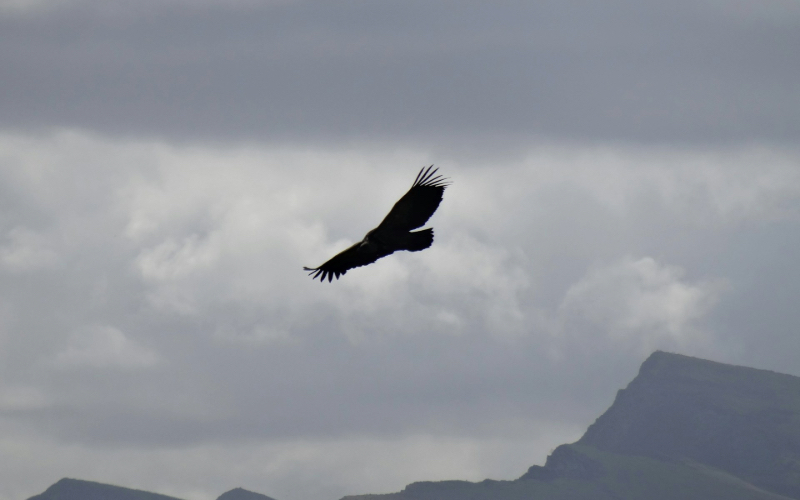
There’s something almost mythical about birding in the Scottish Highlands. Perhaps it’s the scale—those vast, empty landscapes stretching to distant horizons. Perhaps it’s the weather—dramatic, moody, changing by the minute. Or perhaps it’s the birds themselves: golden eagles soaring over mountain ridges, ospreys plunging into mirror-calm lochs, capercaillies displaying in ancient pine forests like creatures from another age.
The Highlands aren’t just another birding destination. They’re genuinely special, hosting species found nowhere else in Britain, offering wilderness experiences increasingly rare in our crowded island, and delivering moments that’ll stay with you forever. Watching a golden eagle hunt across a mountainside, so close you can see individual feathers moving in the wind, so powerful it seems to own the sky—that’s not just birdwatching. That’s something profound.
But Highland birding demands preparation. The distances are vast, the weather can be brutal, the midges are legendary (and I’m not exaggerating—they’re genuinely awful), and some species require serious effort, specialist knowledge, or sheer luck to see. This isn’t park birding where you rock up casually and everything’s laid out nicely. This is proper wilderness, and it requires respect, planning, and realistic expectations.
So let me guide you through Highland birding—where to go, what to see, when to visit, and how to make the most of what might be the birding trip of your lifetime. By the end, you’ll know exactly how to plan your Highland adventure and what magnificent birds are waiting for you in Scotland’s wild north.
The Highland Landscape: Understanding What You’re Getting Into
Before we dive into specific birds and sites, let’s talk about what the Highlands actually are, because understanding the landscape is crucial to understanding the birding.
The Scottish Highlands cover roughly the northern half of Scotland—we’re talking about 10,000 square miles of mountains, moorland, ancient forest fragments, countless lochs, and some of Britain’s most remote and spectacular scenery. The population density is incredibly low—there are areas where you can walk for days without seeing human habitation. This isn’t the manicured, accessible countryside of southern England. This is genuinely wild.
Caledonian pine forests—remnants of the ancient woodland that once covered much of Scotland—survive in scattered pockets. These Scots pine forests, with their distinctive red-barked trees, support unique bird communities including species found nowhere else in Britain. They’re magical places, atmospheric and primal.
Moorland and peatland dominate huge areas—heather, grasses, and bog creating an austere but beautiful landscape. This is grouse country, and it’s managed primarily for red grouse shooting, which controversially affects predator populations but does maintain the habitat.
Mountains—Munros (peaks over 3,000ft), dramatic ridges, high plateaux—require proper hillwalking skills and equipment. Some of the best Highland birds live above 800 meters, meaning you need fitness and mountain experience to reach them.
Lochs—from tiny pools to massive Loch Ness—provide aquatic habitat. Many now host ospreys, and the surrounding areas support diverse bird communities.
The weather is famously unpredictable and often harsh. Summer can bring glorious sunshine but also horizontal rain and gales. Winter is genuinely tough with snow closing roads and making upland areas inaccessible. You can experience four seasons in a single day. This dramatically affects birding—plans need flexibility, and you need proper gear.
And then there are the midges. These tiny biting insects (Culicoides impunctatus, if you care) emerge in vast clouds from May through September, particularly in calm, damp conditions. They’re hellish. Genuinely hellish. You need protection—head nets, repellent, Smidge or Avon Skin So Soft (weirdly effective), covering clothing. Don’t underestimate them. They can ruin trips if you’re unprepared.
But despite—or perhaps because of—these challenges, Highland birding is utterly rewarding. The wildness is the point. These birds exist in these landscapes because they need space, wilderness, and minimal disturbance. You’re entering their world, and it’s magnificent.
The Big Three: Eagles, Ospreys, and Capercaillies
Let’s address the headline acts—the birds people specifically travel to the Highlands to see.
Golden Eagles: Masters of the Mountains
Golden eagles are simply magnificent. Britain’s largest raptor (alongside white-tailed eagles), with wingspans exceeding 2 meters, they’re the Highland icon. Scotland hosts around 500 breeding pairs—the vast majority of the UK population—and seeing one is genuinely thrilling.
They’re huge. I can’t emphasize this enough. Your first golden eagle will shock you with its size. They make buzzards (which are substantial birds) look like sparrows. They soar on broad, slightly upswept wings, holding them in a shallow V-shape. Adults are dark brown overall with golden feathers on the head and nape (hard to see except at close range). Juveniles show white patches on the wings and tail base, which disappear with age.
Where to see them: The Isle of Mull is deservedly famous and probably your best bet. Multiple breeding territories across the island mean sightings are highly likely. The RSPB runs Mull Eagle Watch from a hide during the breeding season (April-August), with expert staff and scopes set up on a nest. This offers guaranteed, close views with interpretation. It’s brilliant for first-timers.
Beyond the organized hide, Mull offers numerous opportunities. Drive the island’s roads—particularly the west coast—scanning ridgelines and mountainsides. Eagles hunt across lower ground, particularly in poor weather when they drop below the cloudbase. Early morning and late afternoon are best when they’re most active.
The mainland coast—Morvern, Ardnamurchan, coastal Wester Ross—also hosts territories. These are less reliable than Mull but offer wild, remote settings. Skye has several pairs, though the mountainous terrain makes viewing more challenging. The Cairngorms hold mountain territories, but finding eagles here requires hiking to higher ground and serious patience.
Viewing tips: Patience is everything. Eagles range over vast territories—up to 50 square kilometers—and spending hours in one spot isn’t unusual. Scan systematically, checking ridgelines where eagles ride updrafts, and mountain faces where they hunt. Look for soaring birds high up—that V-wing profile and sheer size are diagnostic even at extreme distance.
Watch their behavior. Hunting eagles fly low along hillsides, checking for ptarmigan and mountain hares. Soaring birds are either traveling between hunting areas or thermalling upward on hot days. If you see one, watch it—they’re endlessly fascinating, and the way they command their landscape is humbling.
The conservation story is bittersweet. Golden eagles were persecuted heavily into the 20th century—poisoning, shooting, egg collecting nearly destroyed them. Legal protection and changing attitudes allowed recovery, but illegal persecution continues on some grouse moors. Satellite-tagged eagles disappear suspiciously often in certain areas. Conservation remains ongoing, and tourism money provides economic justification for protecting them.
Ospreys: The Fish Hawks
Ospreys are one of British conservation’s great success stories, and the Highlands are central to that story. These magnificent raptors—specialist fish-eaters with reversible outer toes for gripping slippery prey—were driven extinct in Britain by 1916 through persecution. Then, in 1954, a pair naturally recolonized at Loch Garten in Speyside. That pair became famous, protected, and watched by thousands. Today, over 300 pairs breed in Britain, the vast majority in Scotland, with the population still expanding.
Ospreys are fantastic birds to watch. They’re large (but smaller than eagles), with white underparts heavily marked with brown, brown upperparts, and a distinctive dark eye-stripe. Their hunting behavior is spectacular—circling high above water, hovering briefly when they spot prey, then folding wings and plunging feet-first into the water. They emerge (hopefully) with a fish grasped in both talons, shake off water mid-flight, and carry the prey head-forward back to the nest or feeding perch.
Loch Garten RSPB near Aviemore is the must-visit osprey site. The famous nest site (not the original—that tree fell) has an excellent visitor centre with live video feeds showing the nest in intimate detail. You can watch the adults incubating, feeding chicks, and all the drama of breeding season without any disturbance to the birds. The centre has outdoor viewing of the nest too (distant but real), knowledgeable staff, and a shop. It’s perfectly set up for visitors and runs April through August when ospreys are present.
But ospreys are no longer rare in the Highlands. They’re now widespread, with many lochs hosting breeding pairs. Rothiemurchus Estate near Aviemore has ospreys at Loch an Eilein, where you can watch them fishing from the loch shore. The ruined castle on the island and Caledonian forest setting make it especially beautiful.
Driving Highland roads, watch any substantial loch or river. Ospreys fishing are obvious—large birds hovering over water, plunging dramatically, emerging with fish. If you see one catch successfully, watch where it flies—it’ll return to its nest or a regular feeding perch, possibly giving you even better views.
The timing is important. Ospreys are summer migrants, arriving late March/early April and departing August/September. They’re most visible and active during breeding season (May-July) when they’re constantly fishing to feed hungry chicks. By August, juveniles are learning to fish and adults are preparing to migrate—activity remains high but the season’s ending.
Capercaillie: The Critically Endangered Giant
Now we need to talk about capercaillie with complete honesty, because this is complicated, ethically fraught, and genuinely concerning from a conservation perspective.
Capercaillies are Britain’s largest grouse—males are the size of turkeys, absolutely massive for a forest bird. Males are slate-grey with green breast sheen, red wattles above the eyes, and a distinctive beard of feathers. They’re spectacular. Females are smaller, brown and cryptically patterned. They live in Caledonian pine forests, feeding on pine needles in winter and ground vegetation in summer.
Here’s the problem: only around 1,000 birds remain in Scotland, down from about 20,000 in the 1970s. The population has crashed catastrophically and continues declining. They’re critically endangered in the UK, and extinction is a genuine possibility.
Why the crash? Multiple factors: habitat loss and fragmentation, increased predation (especially of nests and chicks), disturbance by people (including birders), climate change affecting chick survival, deer fencing creating barriers, and possibly disease. It’s a complex, multi-faceted crisis.
Disturbance is a real issue. Capercaillies are incredibly shy and sensitive. Human presence in breeding territories can cause nest abandonment. Males displaying at leks (traditional breeding display grounds) will abandon those leks if disturbed. Birds flushed repeatedly expend energy they can’t afford to lose. And because they’re such a target species—so spectacular, so rare, so sought-after by listers—they’ve been subjected to intense birder pressure.
So here’s my honest advice: casual birders should not actively seek capercaillie. The population cannot sustain the disturbance. If you’re walking in an appropriate habitat and happen to encounter one, consider yourself extraordinarily fortunate, enjoy the moment, and move on. But deliberately trying to find them—walking forests at dawn hoping to flush them, seeking leks, repeatedly visiting known areas—is ethically questionable given their conservation status.
Organized viewing exists through RSPB Abernethy’s guided lek watches, accessed by advance ballot with strictly limited numbers. These are controlled, expertly guided, and designed to minimize disturbance. If you’re serious about seeing capercaillie responsibly, this is the ethical route. But places are limited and allocated by lottery months in advance.
The lekking behavior is extraordinary—males gather at traditional sites in April and May, performing elaborate displays involving fanned tails, puffed chests, bizarre clicking and popping sounds, and aggressive interactions with rivals. It’s a remarkable sight. But observing it requires exceptional care to avoid disturbance.
Conservation efforts are intensive—habitat management, predator control, deer fence marking, and research. Organizations like RSPB Scotland and Forestry and Land Scotland are working hard. Whether it’s enough remains uncertain. The species is in deep trouble.
So yes, capercaillie are a Highland specialty. They’re magnificent, and seeing one would be incredible. But please, please consider whether your desire to see one is worth the potential impact. Sometimes the most responsible choice is not to chase certain species. The capercaillie population needs space, quiet, and minimal disturbance more than it needs another observer.
Other Highland Specialties Worth Your Time
Beyond the big three, the Highlands host numerous other special birds, many of which are easier to see and less ethically problematic to pursue.
Ptarmigan: The Alpine Specialists
Ptarmigan are genuinely special—Britain’s only true alpine bird, living year-round above 800 meters in harsh mountain conditions. They’re grouse-like birds that change plumage seasonally: white in winter for snow camouflage, mottled grey-brown in summer. They’re remarkably tame, having evolved with minimal predator pressure and consequently showing little fear of humans.
Finding ptarmigan requires getting to high elevations, which means proper hillwalking. The Cairngorms are your best bet—the Cairn Gorm mountain itself (accessible via funicular railway to upper station, then walking higher) hosts ptarmigan. The Northern Corries, Braeriach, and other high Cairngorm plateaux all have them.
But here’s the catch: you need mountain skills, fitness, and appropriate conditions. These are serious mountains where weather kills people regularly. Don’t attempt high Cairngorms unless you’re properly equipped, experienced, and the weather’s suitable. Ptarmigan aren’t worth dying for.
If you do reach an appropriate habitat, ptarmigan are often surprisingly easy to find—they’re visible on open ground, often in pairs or small groups, and will let you approach fairly closely. Summer plumage birds blend remarkably well with lichen-covered rocks, but movement gives them away. Listen for their croaking calls.
Crested Tit: The Accessible Specialty
Crested tits are confined to Scottish Caledonian pine forests in the UK (they’re widespread in continental Europe). They’re beautiful little birds—grey and brown with distinctive pointed crests, pinkish-buff underparts, and curved black-and-white facial markings. And crucially, they’re relatively easy to see.
Speyside pine forests host good populations. RSPB Loch Garten has feeders that crested tits visit regularly, providing ridiculously easy views. Rothiemurchus Estate also offers good crested tit opportunities. Walk any mature Caledonian pine forest in Speyside and you’ll likely encounter them—they’re vocal (a distinctive purring trill) and active, often in mixed flocks with coal tits, goldcrests, and treecreepers.
They’re acrobatic, constantly moving through pine branches, sometimes hanging upside-down, probing bark and needles for invertebrates. They’ll visit feeders readily, particularly in winter when natural food is scarcer. Unlike capercaillie, you can actively look for crested tits without ethical concerns—they’re common in suitable habitat and not particularly disturbed by observers.
Scottish Crossbill: The Endemic Enigma
Scottish crossbills are Britain’s only endemic bird species—found nowhere else on Earth. They’re adapted specifically to feeding on Scots pine seeds, with bills crossed at the tips for extracting seeds from cones. Sounds straightforward, except identifying them is nightmarishly difficult.
Three crossbill species occur in Britain: common crossbill, Scottish crossbill, and parrot crossbill. They look nearly identical. Bill size varies (Scottish intermediate between common and parrot), but there’s overlap. Calls differ subtly, but you need expert knowledge to separate them reliably. Many birders simply don’t count Scottish crossbill on their lists without expert confirmation or call recordings.
They live in the same Caledonian forests as crested tits—Rothiemurchus, Abernethy, Glen Affric. You’ll see crossbills in these forests—males brick-red, females greenish-yellow, feeding acrobatically in pines. Whether they’re Scottish crossbills specifically? That’s the question. If you’re with an expert who identifies them by call, great. Otherwise, enjoy them as crossbills generally and don’t worry too much about which species.
Black Grouse: The Easier Lekking Bird
Black grouse are smaller relatives of capercaillie that also lek (communal display), but they’re less critically endangered and organized viewing is more available. Males are beautiful—glossy black with white undertail coverts and red wattles, lyre-shaped tails. Females are brown and barred.
Leks happen April-May at traditional sites—usually on moorland edges or rough grassland. Males gather pre-dawn, displaying with bubbling, cooing calls, fanned tails, and ritualized posturing. It’s wonderful to watch and less ethically problematic than capercaillie viewing.
Some organized lek watches exist—check with RSPB or local estates. Perthshire around Loch Leven area is good. Various moorland areas across the Highlands host leks. You need to be in position before dawn—birds arrive in darkness and display as light increases.
Red Grouse: The Ubiquitous Moor Bird
Red grouse are everywhere on Highland heather moorland. They’re rufous-red with white-feathered legs, and their “go-back, go-back, go-back” calls are one of the classic Highland sounds. They explode from the heather when disturbed, flying fast and low before dropping back into cover.
You don’t need to specifically look for red grouse—they’re numerous and you’ll encounter them constantly if you’re walking or driving through moorland. They’re important economically for driven grouse shooting, which shapes much of Highland land management for better or worse.
White-Tailed Eagles: The Coastal Giants
White-tailed eagles (also called sea eagles) are even larger than golden eagles, with broader, plank-like wings and distinctive white tails (adults only—juveniles are brown). They’re coastal and wetland specialists, hunting fish, waterfowl, and carrion.
Reintroduced from 1975 after extinction, they’ve recovered spectacularly. Isle of Mull hosts both golden and white-tailed eagles, making it exceptional. White-tails prefer the coast while goldens favor mountains, reducing competition. Skye and various western isles also host them.
Some locations run fish-feeding stations where white-tailed eagles are attracted with fish scraps, providing guaranteed close views. This is somewhat artificial but offers incredible photography opportunities and economic benefits supporting tolerance of the species.
Planning Your Highland Trip: When, Where, and How Long
Highland birding requires thought and preparation. Let’s talk logistics.
When to Visit
Spring (April-May) is wonderful—migrants returning, ospreys arriving, grouse lekking, ptarmigan accessible as snow melts, increasing daylight, and weather improving (though still variable). The landscape comes alive. Midges aren’t yet hellish.
Summer (June-August) offers peak breeding activity, long daylight hours (it barely gets dark in June at Highland latitudes), seabird colonies active, and ospreys constantly fishing. But midges are at their apocalyptic worst, and some species are quieter post-breeding. Tourism peaks, meaning busy roads and full accommodation.
Autumn (September-October) brings spectacular colors, red deer rutting (a magnificent wildlife spectacle), ospreys departing, and reduced midges. The weather deteriorates but can still deliver beautiful days. Fewer tourists.
Winter (November-March) is challenging—short daylight, harsh weather, snow closing upland areas, and limited access. But snow buntings are present, grouse more visible, and eagles remain. It’s stunning scenically but demands serious preparation.
My recommendation: Late April through early June offers the best balance—good weather probability, peak bird activity, manageable midges, and reasonable access. September is excellent too if you can handle more weather variability.
Where to Base Yourself
Speyside/Aviemore is the logical choice for many. It’s central to key sites—Loch Garten, Rothiemurchus, Cairngorms access—with good accommodation range and tourist infrastructure. It’s a proper base for several days of birding.
Isle of Mull requires commitment (ferry from Oban) but rewards it magnificently. Eagles, otters, coastal birding, and beautiful landscapes make it worth a multi-day stay. Various accommodations from campsites to hotels.
Fort William area offers access to Ben Nevis, Glen Coe, and west coast sites. Good facilities and central location for exploring different areas.
Northwest Highlands (Ullapool, Assynt) are more remote and spectacular, with access to sites like Handa Island and incredibly wild landscapes. Fewer tourists but also fewer facilities.
How Long You Need
A weekend (2-3 days) allows one area in depth—Speyside or Mull recommended. You’ll see key species but it’s rushed.
A long weekend or week (4-7 days) lets you cover multiple areas properly—Speyside AND west coast, building in weather contingency and relaxed pace.
Two weeks allows comprehensive coverage, multiple regions, weather flexibility, and time to really soak in the experience.
Essential Gear and Preparation
Highland birding demands proper equipment. This isn’t optional.
Binoculars are essential—8×42 or 10×42 recommended. Waterproofing is non-negotiable given Highland weather.
A telescope is highly recommended. Eagles and distant mountain birds benefit enormously from 20-60x magnification. Bring a sturdy tripod—Highland winds are fierce and scopes need stability.
Clothing: Layer system essential—base layer (merino wool ideal), insulation layer (fleece or down), waterproof shell (proper waterproofs, not fashion jackets). Wind protection matters as much as rain protection. Hat and gloves even in summer. Broken-in waterproof boots. You will get wet. You will get cold. Prepare accordingly.
Midge protection: Head net, repellent (Smidge, Avon Skin So Soft), covering clothing. Seriously, don’t underestimate this. Midges can genuinely ruin trips. They drive people to distraction. Prepare properly or suffer.
Navigation: OS maps, compass, GPS. Mobile signal is patchy to non-existent in many areas. Know how to navigate properly if venturing into mountains.
Safety kit: First aid, spare food and water, emergency shelter, torch, charged phone (even without signal, it can help with emergencies).
If attempting mountains: Full mountain safety gear, skills, fitness, and realistic assessment of your abilities. People die in the Cairngorms regularly. Don’t become a statistic.
A Sample Itinerary: Speyside Weekend
Let me give you a realistic three-day Speyside itinerary:
Day 1: Loch Garten and Rothiemurchus
Morning at RSPB Loch Garten. Arrive at opening (usually 10am). Visit the osprey centre—watch live nest video, chat with staff, observe the distant nest. Walk the trail through Caledonian forest—crested tits, Scottish crossbills (probably), coal tits, goldcrests. The forest atmosphere is wonderful—ancient pines, juniper, bilberry understory.
Afternoon to Rothiemurchus Estate. Walk to Loch an Eilein—ospreys often fish here, and the setting with ruined castle is gorgeous. Continue through forest trails—more crested tits, possibly red squirrels at feeders near the visitor centre. The estate is beautiful and accessible.
Day 2: Cairngorms
Early drive to Cairngorm mountain car park (ski area). Walk around the base area scanning for snow buntings—they’re regular here, often quite tame, feeding on spilled food and seeds. They’re beautiful little birds, and this is one of UK’s easiest places to see them.
If you’re mountain-capable and the weather’s suitable, consider walking higher for ptarmigan. The path up from the car park is steep and requires fitness, but ptarmigan are possible at higher elevations. Only attempt this if you’re properly equipped and experienced.
Alternative if mountains aren’t your thing: explore lower Cairngorm forests—Glenmore Forest Park has trails through lovely pine forest with typical woodland species.
Day 3: Final Speyside Sites
Morning return to Loch Garten if you want more time, or explore Glen More Forest—there are lovely walks through mature forest, good for woodland species.
Afternoon wrap-up at any sites you particularly enjoyed or species you’ve missed. Maybe visit Aviemore itself—it’s a tourist town but has outdoor shops for any gear you forgot!
This itinerary is realistic, achievable, and would deliver crested tits, Scottish crossbills, ospreys, various woodland birds, and possibly snow buntings and ptarmigan depending on your ambition. Eagles aren’t guaranteed from Speyside but are possible—scanning from high viewpoints sometimes produces distant birds.
Final Thoughts: The Highland Experience
Highland birding isn’t easy, cheap, or guaranteed. Weather can scupper plans. Target species might not appear. Midges can make you miserable. The landscapes are vast and sometimes unforgiving. You need preparation, flexibility, and realistic expectations.
But when it works—when you watch a golden eagle soaring against mountain backdrops, when an osprey plunges into a loch right in front of you, when you stumble across ptarmigan on a high plateau, when you realize you’re standing in genuine wilderness surrounded by mountains and sky—it’s transformative. This isn’t just birdwatching. This is experiencing nature at its wildest and most magnificent.
The Highlands offer something increasingly rare: space, wildness, and the chance to see spectacular birds in spectacular landscapes. It’s Britain at its most dramatic and beautiful. And the birds—from the iconic eagles to the secretive capercaillies, from tame ptarmigan to acrobatic crested tits—are genuinely special.
So plan your trip. Prepare properly. Respect the landscape and its wildlife. Accept that not everything goes to plan. And go experience Highland birding for yourself. The eagles are soaring, the ospreys are fishing, and Scotland’s magnificent wild places are waiting.
Trust me—standing on a Highland mountainside with golden eagles overhead and vast emptiness stretching in every direction will change how you think about British wildlife. This is why people travel thousands of miles to bird in Scotland. This is what makes the Highlands genuinely world-class.